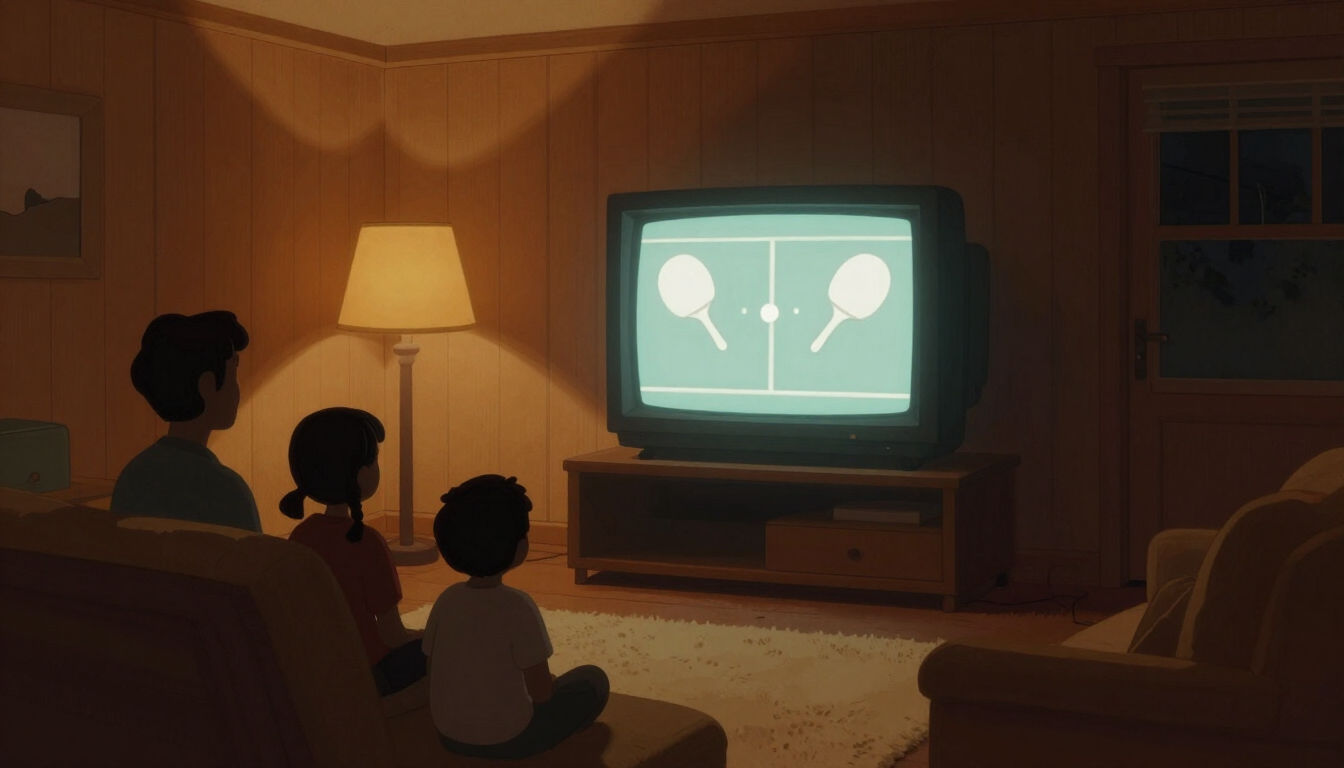
Pong1972 · 1970s
Two Paddles and a Dot: The Night Television Learned to Play
Before save files and side quests, there was a square dot bouncing between two lines — and it was enough to fill a bar with wonder.
Picture a wood-paneled living room in 1972, the television glowing like a hearth. On its screen: two white paddles, a dotted line, and a square of light drifting back and forth. Pong was not the first video game ever made, but it was the first one that invited everyone in. You did not need to read a manual. You needed only to understand that the ball must not pass you by.
Nolan Bushnell and Al Alcorn built something closer to a folk game than a machine — table tennis distilled to its warmest essence. When the prototype cabinet appeared in a California tavern, patrons fed it quarters until it jammed. The story goes that the machine broke because its coin box overflowed, which remains the coziest technical failure in gaming history.
What endures about Pong is its honesty. Every game since — every sprawling open world, every hundred-hour epic — is still, at heart, a conversation between a player and a rule. Pong simply said the quiet part out loud: here is a dot, here is your paddle, do not let it past. The whole medium grew from that small, glowing seed.
More from the 1970s
 1970s
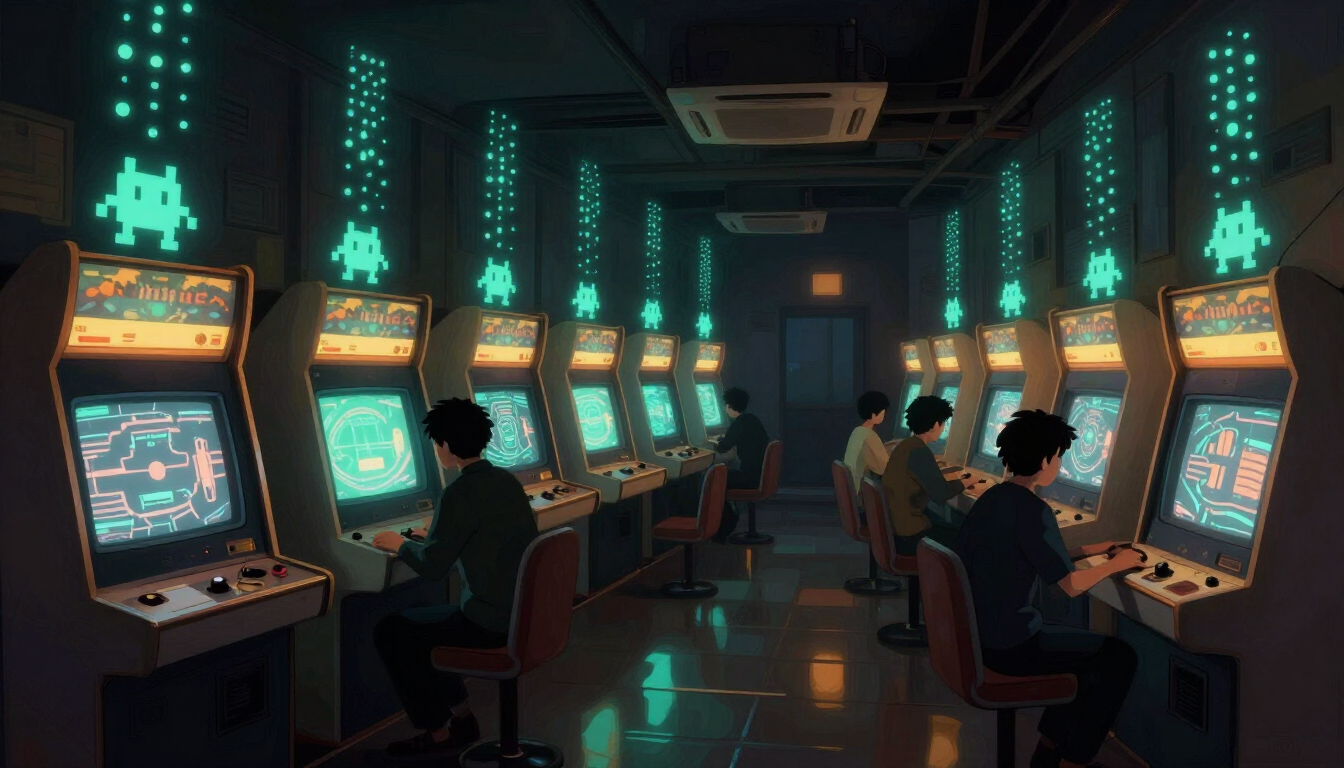
1970sSpace Invaders · 1978
The Invaders Are Descending, and the Arcade Smells of Rain
Tomohiro Nishikado's descending armada turned arcades into bunkers and taught a generation the rhythm of hold, fire, breathe.
 1970s
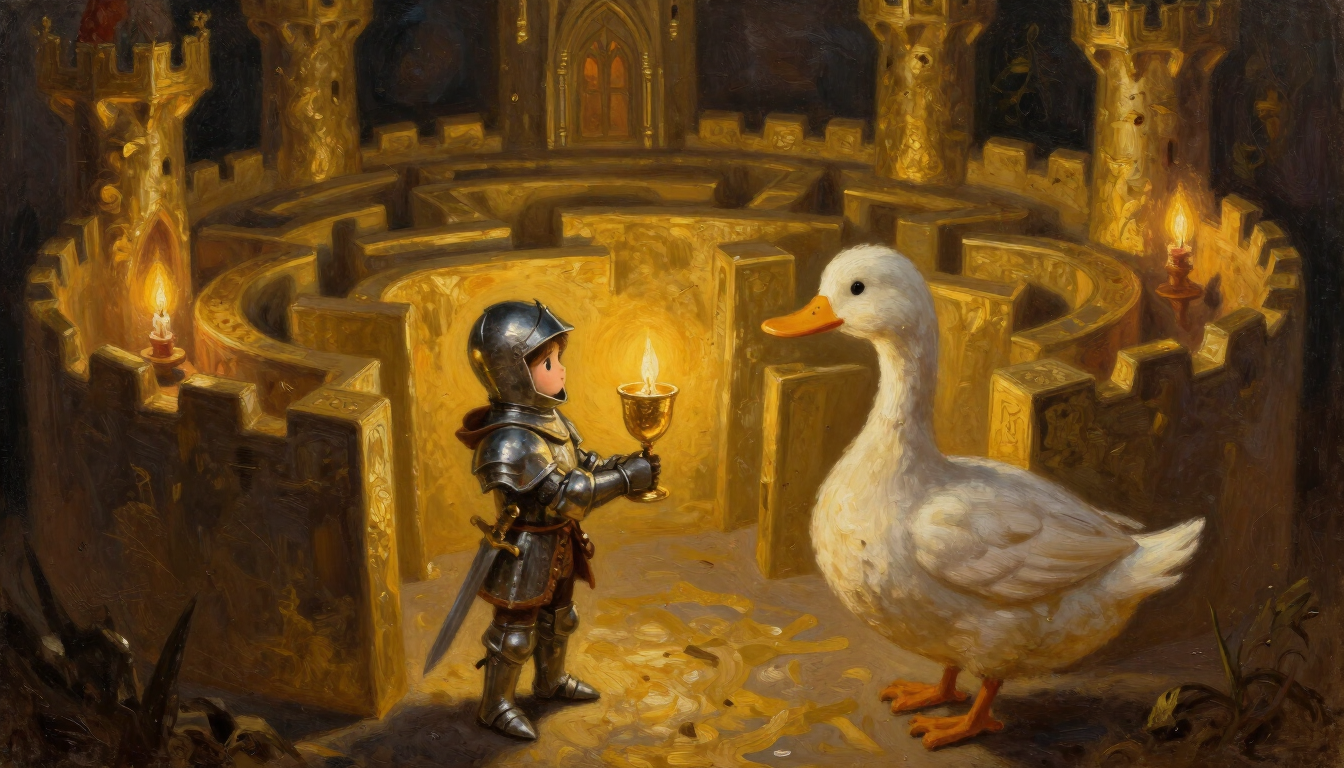
1970sAdventure · 1979
A Duck-Dragon, a Chalice, and the First Great Quest
Warren Robinett's Atari 2600 quest gave us the first action-adventure, the first Easter egg, and dragons that look endearingly like ducks.