6 mainline entries2002 — today
Splinter Cell
A third echelon, a pair of night-vision goggles, and the dark that became a weapon.
The story of the series
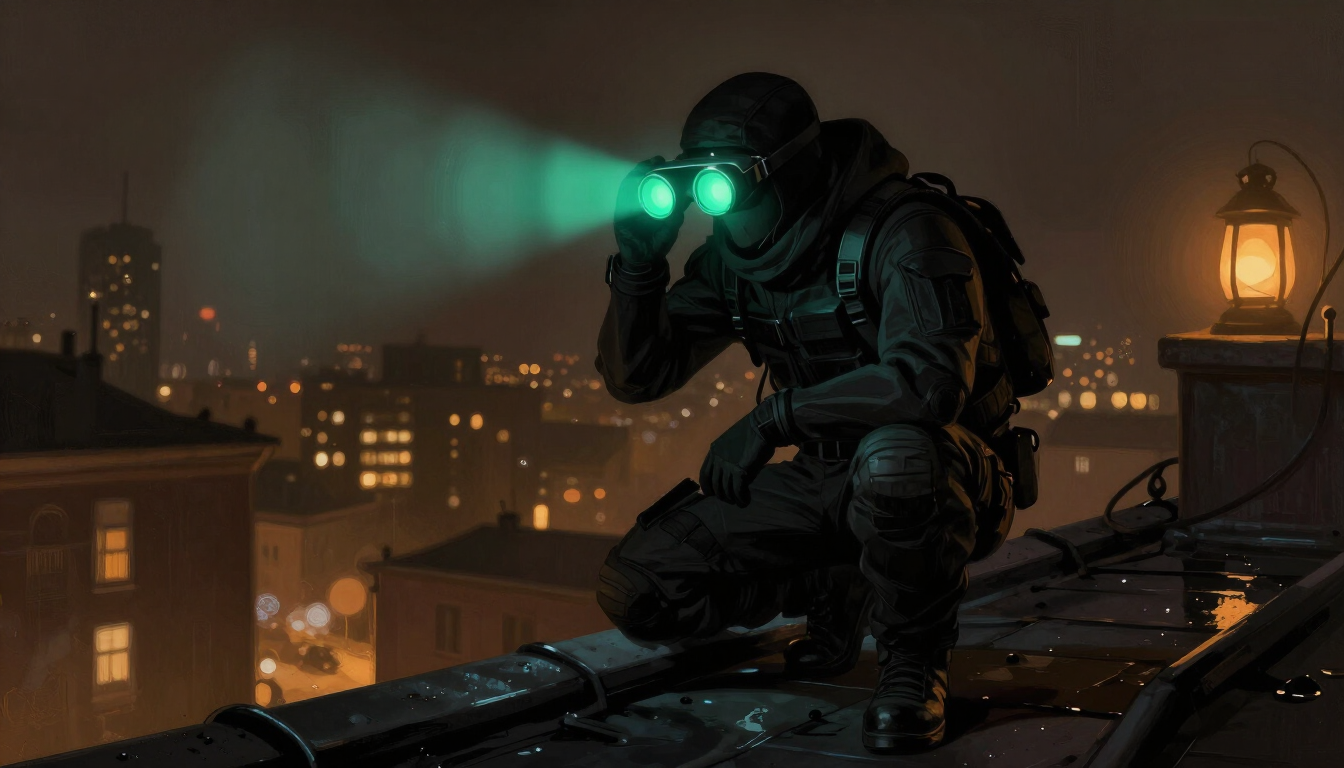
Splinter Cell arrived in 2002 as Ubisoft’s answer to Metal Gear — a grittier, more tactical take on stealth starring Sam Fisher, a grizzled NSA operative with tri-focal night-vision goggles and a license to disappear. Where Metal Gear was cinematic and strange, Splinter Cell was methodical and physical: shadows you clung to, lights you shot out, and guards you grabbed from the dark. Across six entries the series rode the wave of the early-2000s stealth boom, flirted with action, and then quietly went dormant — leaving behind a template for tension that the genre has never quite replaced.
Every release
The release timeline
From the first cartridge to the latest entry — every mainline game in the Splinter Cell series, in the order it reached players.
- 2002 · Xbox / PC / PS2
Splinter Cell
The debut. Sam Fisher, third echelon, and a shadow-based stealth loop — hide in the dark, shoot out lights, grab guards. Gritty and methodical.
- 2004 · Xbox / PC / PS2
Splinter Cell: Pandora Tomorrow
A refined sequel with a pioneering spies-vs-mercenaries multiplayer that became a cult favorite of the era.
- 2005 · Xbox / PC / PS2 / GC
Splinter Cell: Chaos Theory
The masterpiece. Open-ended levels, the knife, cooperative play, and a score by Amon Tobin — the series at its absolute peak.
- 2006 · Xbox 360 / PS3 / Wii / PC
Splinter Cell: Double Agent
Sam goes undercover with a terrorist group, juggling trust on both sides. Moral choices and a darker, more personal story.
- 2010 · Xbox 360 / PC
Splinter Cell: Conviction
A furious, fast reinvention — a rogue Sam, mark-and-execute kills, and a story of revenge. Stealth meets blockbuster action.
- 2013 · PS3 / 360 / PC / Wii U
Splinter Cell: Blacklist
A new voice for Sam and a globe-trotting terror plot, blending the series’ stealth roots with Conviction’s pace. The last mainline entry — so far.
How it changed
What changed across releases
The Splinter Cell series never stood still. Here is how it reinvented itself, era by era.
The shadow-stealth foundation (2002–2005)
The first three games defined a methodical, physical stealth — light and shadow as mechanics, gadgets and grabs as tools — and peaked with the open-ended brilliance of Chaos Theory.
The undercover pivot (2006)
Double Agent added moral choices and a dual-loyalty story, pushing Sam into a more personal, narrative-driven frame while keeping the stealth core.
The action reinvention and the long silence (2010–today)
Conviction traded patience for aggression and mark-and-execute speed; Blacklist tried to reconcile both — and then the series went dormant, its stealth template left without a successor.