
Tetris1989 · 1980s
Blocks Fall Like Snow Over a Sleeping City
Alexey Pajitnov's falling blocks escaped the Soviet Union, rode the Game Boy into every pocket, and became the most universal game ever made.
Alexey Pajitnov built Tetris on a Soviet computer in 1984, out of a childhood love of pentomino puzzles, and it slipped across borders the way great folk songs do — copied, shared, impossible to contain. When it arrived bundled with the Game Boy in 1989, the falling blocks found their forever home: a game of perfect tidiness for train rides and waiting rooms.
There is no story, no character, no end — only seven shapes and the small, deep pleasure of a line vanishing. Psychologists speak of the Tetris effect, the way the blocks keep falling behind your eyes after you stop playing. It is less a game than a rhythm you join, like stacking firewood or kneading bread.
Tetris may be the most universal artifact gaming has produced, playable by anyone alive, in any language, on any machine. And on a winter night, with the blocks drifting down like snow over a sleeping city, it remains what it has always been: the coziest way to put the world in order, one line at a time.
More from the 1980s
 1980s
1980sPac-Man · 1980
Waka-Waka by Candlelight: The Maze That Fed the World
Toru Iwatani looked at a pizza missing a slice and built the first video game character the whole world loved.
 1980s
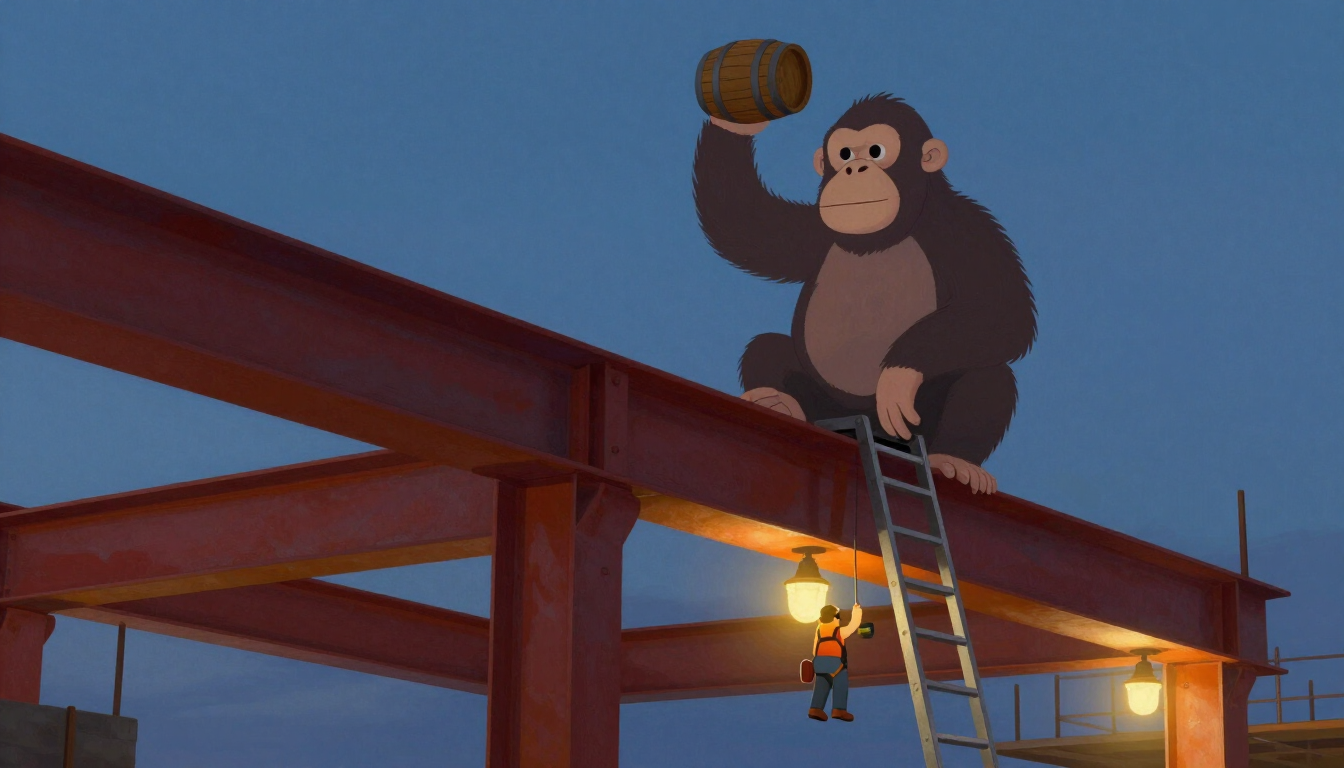
1980sDonkey Kong · 1981
The Ape, the Carpenter, and the Ladder to Everything
A stubborn ape, a carpenter named Jumpman, and the game that introduced Mario and made Nintendo a household name.
 1980s
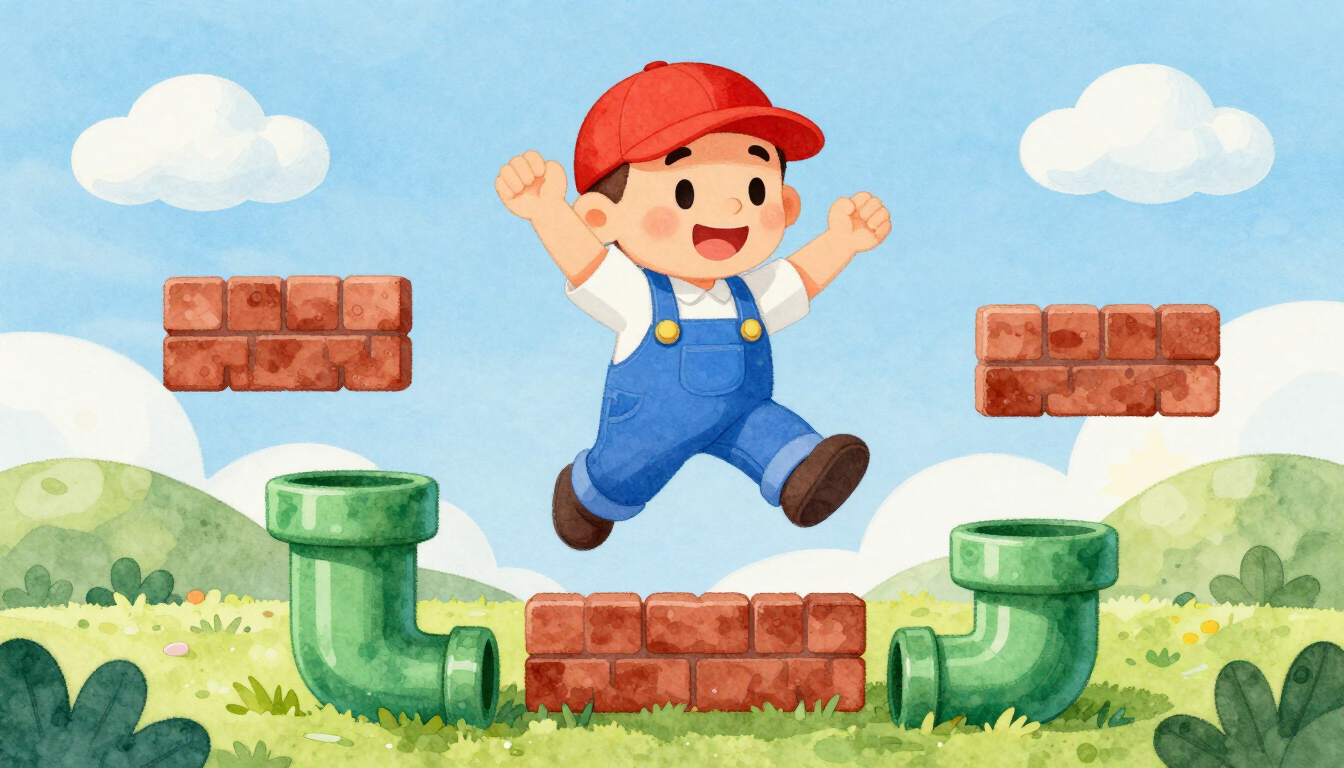
1980sSuper Mario Bros. · 1985
World 1-1: The First Steps of a Million Journeys
The first screen of Super Mario Bros. is the most carefully taught lesson in game design — and the doorway to the modern industry.